Commercial Food Waste Recycling in Australia: A Complete Guide
Commercial food waste recycling is the process of separating food scraps and organic waste from general rubbish so that suitable materials can be collected and processed through appropriate organic waste recovery systems. For Australian businesses, an effective food waste recycling system starts with
dedicated commercial food waste bins positioned where food is prepared, served or consumed. Restaurants, cafés, hotels, catering businesses, supermarkets, schools, healthcare facilities and other organisations can generate substantial amounts of food waste every day.
Separating this waste at the source can make commercial waste management more organised while helping businesses keep food waste out of the general waste stream. For businesses looking for practical food waste bins in Australia, Ribco Bins supplies dedicated commercial solutions designed for environments including kitchens, cafés and food-service areas.
What Is Commercial Food Waste Recycling?
Commercial food waste recycling involves collecting food scraps separately from general
waste so the material can be sent to an appropriate organic waste processing facility.
Typical food waste can include:
- Fruit and vegetable scraps
- Food preparation waste
- Leftover food
- Bread, rice and pasta
- Coffee grounds and tea waste
- Spoiled food
- Other organic materials accepted by the business’s waste contractor
The exact materials accepted vary depending on the collection service and processing facility, so businesses should always confirm their local requirements before introducing a food waste recycling program. The key principle is
source separation: food waste should be placed into a clearly identified food waste bin rather than mixed with general rubbish.
Why Is Food Waste Recycling Important for Australian Businesses?
Food waste can be wet, heavy and difficult to manage when mixed with general rubbish. A dedicated
commercial food waste management system allows businesses to separate this waste stream at the point where it is generated.
A properly designed system can help businesses:
- Improve waste separation
- Reduce contamination between waste streams
- Keep food preparation areas more organised
- Make food waste collection easier
- Support broader sustainability initiatives
- Provide clearer disposal instructions for employees and customers
The bin itself is an important part of this process. If a food waste bin is difficult to access, difficult to clean or poorly labelled, users may be more likely to place waste into the wrong stream.
What Is the Best Food Waste Bin for a Commercial Kitchen?
The best commercial food waste bin depends on the volume of waste, available space,
location and way the kitchen operates.
For busy kitchens, useful features can include:
- A large, accessible opening
- Foot-pedal operation
- A secure lid
- Easy-to-clean surfaces
- Removable liners
- Easy emptying
- Clear food waste graphics
- Durable construction
- A footprint suitable for the available space
For example, Ribco’s
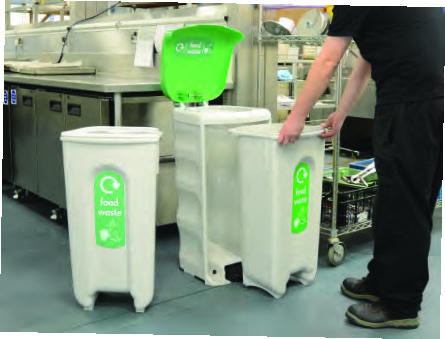
Nexus Shuttle Food Waste Recycling Bin is specifically designed for commercial kitchens, canteens, cafés and other areas where food is prepared or consumed.
It features a large aperture and foot-pedal operation for quick and hygienic disposal, while its design allows it to fit under worktops when not in use.
Internal link opportunity: Link
Nexus Shuttle Food Waste Recycling Bin to the relevant Ribco product page.
What Types of Commercial Food Waste Bins Are Available?
Different businesses require different capacities and configurations. Ribco’s dedicated
Food Waste Bins range includes several options designed for different commercial environments.
Compact Food Waste Bins For offices, cafés, smaller kitchens and areas where floor space is limited, a compact food waste bin can provide a practical solution. The
Nexus 30 Food Waste Recycling Bin has a 30-litre capacity and features a hygienic flip lid designed to help contain odours. Its hidden sack-retention system also allows sacks to be replaced efficiently.
Internal link opportunity: Link
Nexus 30 Food Waste Recycling Bin to the Ribco product page.
Dedicated Kitchen Food Waste Bins High-volume food preparation areas may benefit from larger, mobile solutions.
The Nexus Shuttle has sack-retention options of 30, 40 or 60 litres and includes features designed to make emptying and cleaning easier.
Larger Food Waste Collection Systems For larger facilities, a bigger collection point may be required. Ribco also offers Nexus City food waste housing options designed to accommodate larger wheeled containers. The Nexus City 240, for example, houses a 240-litre wheeled container and uses dedicated
apertures and clear graphics to encourage correct disposal.
Internal link opportunity: Link
Nexus City 240 Food Waste Recycling Bin or large commercial food waste bins to the relevant Ribco product/category page.
Where Can Commercial Food Waste Bins Be Used?
Commercial food waste bins can be used anywhere significant quantities of food are prepared, served or consumed.
Restaurants and Cafés Restaurants and cafés produce food waste during preparation, cooking and service.
Positioning bins close to preparation areas can make separation easier for kitchen staff.
Hotels and Hospitality Hotels may generate food waste from restaurants, breakfast areas, buffets, events, catering and room-service operations. Multiple collection points may be required across a large venue.
Supermarkets and Retail Fresh food departments, bakeries, cafés and prepared-food sections can produce organic waste throughout the day. Clearly identified food waste recycling bins can help staff separate this stream.
Schools and Universities Food waste bins can be positioned in kitchens, cafeterias, dining areas and other food-service locations.
Healthcare and Aged Care Facilities with kitchens and dining services can incorporate dedicated organic waste collection into their broader waste-management systems.
Catering and Events Large events can generate significant food waste within a short period. Choosing appropriately sized and strategically positioned bins can help staff manage waste efficiently. Ribco works with a range of customers including hospitality and venue-management organisations, schools, local government and other commercial users.
How Can a Business Start a Food Waste Recycling Program?
Setting up a commercial food waste recycling system can be approached in several practical steps.
1. Identify where food waste is generated Map the locations where food is prepared, served and consumed.
2. Estimate food waste volumes Monitor the amount of food waste produced each day or week. This helps determine the required bin capacity and collection frequency.
3. Choose suitable commercial food waste bins Consider capacity, dimensions, accessibility, cleaning requirements and whether the bin needs to be mobile.
4. Use clear signage Food waste graphics and colour-coded openings can make it easier for users to identify the correct disposal point. Ribco offers customisable graphics across its range, allowing businesses to tailor recycling identification to their requirements.
5. Position bins where waste is created A food waste bin should be convenient for the people using it. In a commercial kitchen, placing the bin close to preparation areas can reduce unnecessary movement.
6. Educate staff Employees should understand what belongs in the food waste stream and what should go into other recycling or general waste bins.
7. Review and improve Monitor contamination, overflowing bins, odours and collection frequency. Adjust the number, size or position of bins when necessary.
What Should Go Into a Commercial Food Waste Bin?
This depends on the requirements of the local waste collection and processing service. Generally, businesses may collect food scraps such as:
Fruit and vegetable waste, food preparation scraps, leftover food, coffee grounds and other accepted organic materials. However, not every food-service item should automatically be placed into an organic waste bin. Items such as packaging, plastic bags and other materials should only be included if the relevant waste contractor or processing facility specifically accepts them. Clear signage is therefore an important part of an effective
commercial food waste management system.
Commercial Food Waste Recycling FAQs
What is commercial food waste recycling? Commercial food waste recycling is the separate collection and processing of food scraps and other accepted organic waste generated by businesses.
Why do businesses need food waste bins? Dedicated food waste bins make it easier to separate organic waste from general rubbish at the source and can help create a more organised commercial waste-management system.
What businesses use commercial food waste bins?Restaurants, cafés, hotels, catering companies, supermarkets, schools, healthcare facilities, offices and other organisations that generate food waste can use commercial food waste bins.
What size food waste bin does a business need? The appropriate size depends on the volume of food waste generated, available space, collection frequency and how the waste is handled internally.
How do restaurants manage food waste? Restaurants can manage food waste by separating food scraps at the point of generation, using dedicated commercial food waste bins, training staff and arranging appropriate collection and processing services.
Choosing Commercial Food Waste Bins in Australia
An effective food waste recycling system is about more than simply placing a bin in a kitchen. Businesses need to consider
capacity, location, hygiene, accessibility, durability, signage and collection requirements. Ribco Bins supplies commercial waste and recycling solutions across Australia and New Zealand and is the exclusive distributor of Glasdon recycling systems throughout the region.
Its range includes dedicated food waste bins, indoor recycling bins and larger external waste and recycling solutions. Whether you operate a café, restaurant, hotel, school, supermarket or large commercial facility, selecting the right commercial food waste bins can make source separation easier and help create a more effective waste-management system.
Explore Ribco’s Food Waste Bins to find a commercial food waste solution suited to your environment, or view the Nexus Shuttle Food Waste Recycling Bin for a dedicated kitchen solution.